Projects and workflows for cataloging, processing, & analyzing geospatial data

Lidar-Notebooks
A set of efficient pipelines for voxelizing lidar point clouds, computing vegetation structure metrics, and comparing differences among sites/regions.
See Boucher et al., 2023 for use-cases
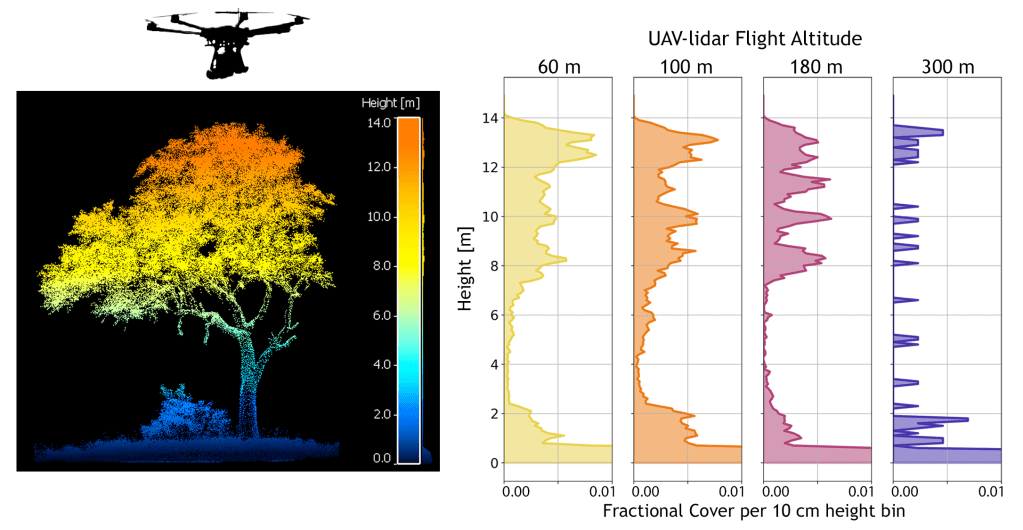
Consists of 3 jupyter notebook workflows:
LasFilePreProcessing
- Tools for clipping point clouds, computing point heights, and making shapefiles of data extents
PolygonMetrics
- A pipeline for computing voxel metrics for polygon features
- Takes in a shapefile of site polygons, outputs lidar vegetation metrics for each polygon
VoxelMetrics
- A pipeline for computing voxelized metrics (vertical cover, plant area index, vegetation complexity, etc.) from lidar point clouds
- Takes in point clouds, builds a 3-D grid, computes metrics in parrallel, and outputs 2-D rasters and 3-D data products as geotiff and netcdf files
Airborne-RS-Catalog
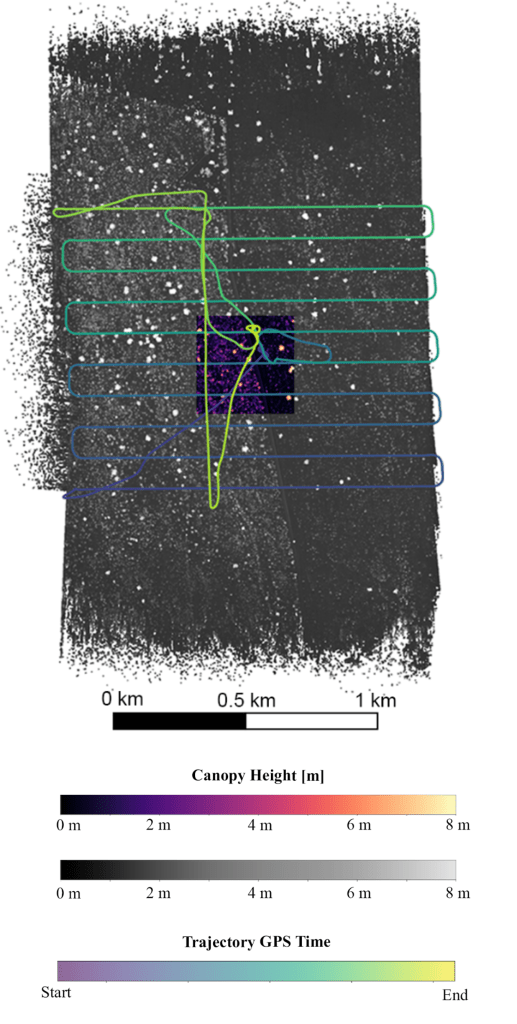
A workflow that catalogs, processes, & visualizes airborne remote sensing datasets, including:
Takes in:
- Airplane/drone flight trajectories
- Base station data
- RGB and thermal imagery
- Lidar point clouds
- Raster data tiles (e.g. Canopy Height Models (CHMs), Elevation models (DTMs), Orthomosaics, etc.)
Outputs:
- Merged, mosaicked, and/or stacked raster data products
- File extent polygons (shapefiles and kmls)
- Metadata .json files (for easy-access later)
See Boucher et al., 2023 for use-cases
Additional projects coming soon!

 Peter Brehm Boucher, PhD